Categories
Blog

Fire Safety Upgrades to Include in Your Allen, TX Remodel

When remodeling your home in Allen, TX, consider incorporating fire safety upgrades. Use fire-resistant building materials like cement board and steel for siding. Install advanced smoke detection systems for real-time alerts and voice notifications. Don’t forget about accessible fire extinguishers and safety equipment in key areas. Upgrade your electrical systems to prevent hazards, and maintain landscaping with fire barriers. There’s more you can do to enhance your home’s safety and peace of mind.

Fire-Resistant Building Materials

When you’re planning a remodel, choosing fire-resistant building materials can greatly enhance your home’s safety.

Opt for materials like cement board, brick, or steel for siding, as they can withstand high temperatures better than traditional wood.

Inside, consider using fire-rated drywall and insulation to slow the spread of flames.

For flooring, look into tile or concrete, which offer excellent fire resistance.

Don’t forget to select fire-resistant roofing materials to protect your home from external threats.

Advanced Smoke Detection Systems

While traditional smoke detectors are essential, upgrading to advanced smoke detection systems can greatly enhance your home’s fire safety.

These systems connect to your home’s Wi-Fi, providing real-time alerts to your smartphone or other devices, even when you’re away. Many advanced detectors can differentiate between smoke and steam, reducing false alarms.

They often include features like voice alerts and the ability to monitor multiple rooms simultaneously.

Fire Extinguishers and Safety Equipment

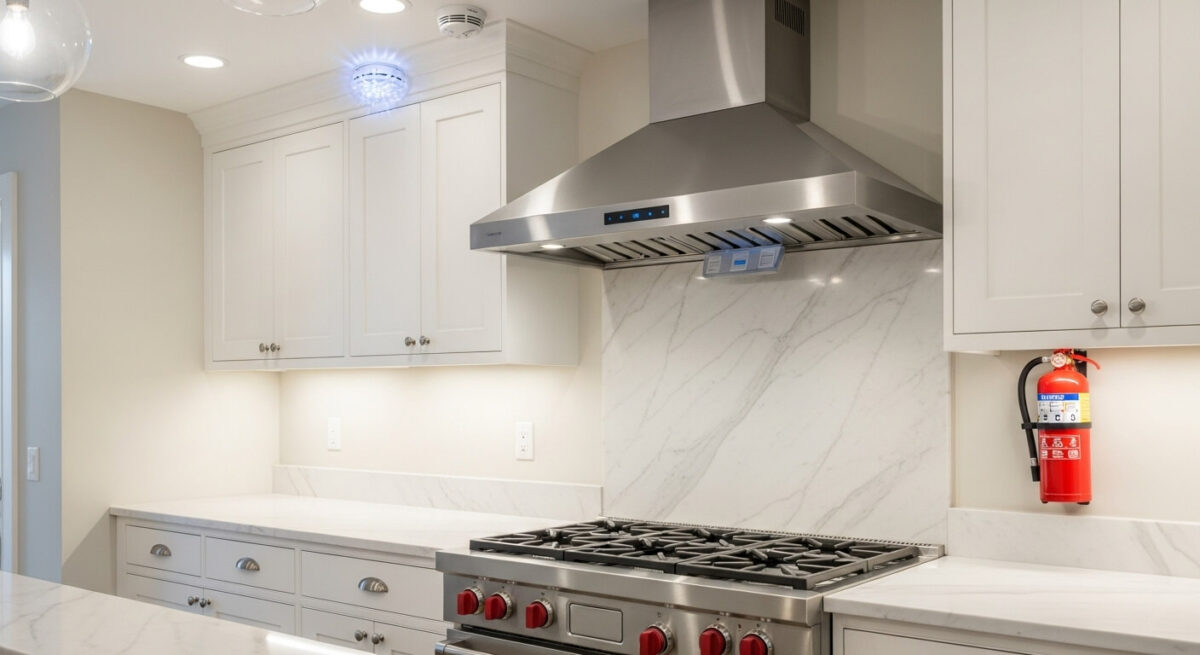
Fire extinguishers and safety equipment are essential components of any fire safety plan, especially during a remodel. You should install fire extinguishers in easily accessible locations, like the kitchen and near exits. Confirm they’re rated for the types of fires likely to occur in your home.

Don’t forget to check their expiration dates and replace them as needed. Additionally, consider adding safety equipment like fire blankets and smoke alarms.

Regularly inspect and maintain these tools to guarantee they function properly. By prioritizing fire safety equipment, you’ll create a safer environment for yourself and your family during your remodeling project.

Safe Electrical Systems and Wiring

Ensuring your electrical systems and wiring are safe is essential, particularly during a remodel. Outdated wiring can pose significant fire risks, so consider upgrading to modern, fire-resistant materials.

Hire a licensed electrician to assess your current system and replace any damaged or frayed wires. Install ground fault circuit interrupters (GFCIs) in areas prone to moisture, like kitchens and bathrooms.

Make sure your outlets are properly grounded and avoid overloading circuits. Regularly check your smoke detectors and carbon monoxide alarms, ensuring they’re connected to your electrical system for reliable power.

Prioritizing these upgrades will help keep your home safe from electrical fires.

Landscaping and Exterior Fire Barriers

As you plan your remodel, consider how landscaping and exterior fire barriers can enhance your home’s safety.

Start by creating defensible space around your property, using fire-resistant plants and materials. Grouping flammable vegetation away from your home reduces fire risk.

Incorporate stone, gravel, or concrete pathways to act as barriers against fire spread. Additionally, installing a non-combustible fence can protect your home from nearby flames.

Regular maintenance, like clearing debris and trimming shrubs, is essential.

Frequently Asked Questions

How Often Should Fire Safety Equipment Be Inspected?

You should inspect fire safety equipment at least once a year.

Regular checks help guarantee everything’s functioning properly, reducing risks.

Don’t forget to test alarms monthly and replace batteries as needed to stay safe!

Are There Grants Available for Fire Safety Upgrades?

Yes, there are grants available for fire safety upgrades.

You should research local government programs, non-profits, or federal assistance options.

They can help you fund essential improvements to enhance your home’s safety and compliance.

What Are the Costs Associated With Fire Safety Renovations?

The costs for fire safety renovations can vary widely, typically ranging from a few hundred to several thousand dollars.

Factors include materials, labor, and the specific upgrades you choose to implement in your home.

Do Fire Codes Vary Between Residential and Commercial Properties?

Yes, fire codes do vary between residential and commercial properties.

Residential codes focus on home safety, while commercial codes emphasize occupant safety and property protection.

Always check local regulations to verify compliance for your specific project.

Can I Install Fire Safety Upgrades Myself?

Yes, you can install some fire safety upgrades yourself, but be certain to follow local codes and guidelines.

It’s often best to consult a professional for complex installations to guarantee everything’s up to standard.

Conclusion

Incorporating fire safety upgrades into your Allen, TX remodel is essential for protecting your home and loved ones. By choosing fire-resistant materials, installing advanced smoke detection systems, and ensuring safe electrical systems, you can significantly reduce risks. Don’t forget to equip your space with fire extinguishers and create exterior fire barriers through thoughtful landscaping. By prioritizing these upgrades, you’re not just enhancing your home’s safety; you’re also increasing its value and peace of mind for years to come.


Categories
Blog

Home Office Soundproofing Tips for Allen, TX Remodels

When you’re remodeling your home office in Allen, TX, soundproofing is key to maintaining focus and productivity. You’ll want to start by identifying the main sources of noise, whether it’s traffic or nearby neighbors. Choosing the right soundproofing materials can make a significant difference, but you might be surprised at how simple adjustments can also enhance your space. As you consider the best ways to minimize distractions, think about how certain design choices can influence your comfort level. Let’s explore some practical strategies that can transform your workspace into a serene environment.

Assess Your Space

To effectively soundproof your home office, you first need to assess your space. Start by identifying the main sources of noise, such as traffic, neighbors, or appliances.

Take note of the room’s layout, including windows, doors, and walls. Consider the materials used in your walls and flooring; some materials absorb sound better than others.

Check for gaps or cracks around windows and doors where sound might seep in. Think about the furniture you have; heavy bookshelves or upholstered pieces can help dampen noise.

Lastly, evaluate your office’s location within your home. If possible, choose a quieter area, away from high-traffic zones.

Choose Soundproofing Materials

Choosing the right soundproofing materials is crucial for minimizing noise in your home office.

Start by considering acoustic panels, which effectively absorb sound and reduce echoes. They’re available in various designs, making it easy to blend them with your decor.

Next, think about soundproof curtains; these heavy fabrics can block outside noise while adding style to your workspace.

Rubber mats or soundproofing underlayment can also be beneficial if you have hard flooring, as they help dampen sound vibrations.

For walls, insulation materials like fiberglass or foam can significantly enhance soundproofing.

Lastly, don’t overlook door sweeps and soundproofing seals; they can dramatically reduce noise infiltration.

Seal Gaps and Cracks

Many homeowners overlook the importance of sealing gaps and cracks when soundproofing their home office. These small openings can let in unwanted noise and disrupt your focus.

Start by inspecting windows and doors for any gaps; use weatherstripping or caulk to seal them. Pay attention to outlets, light fixtures, and vents as well, as these can also be sources of sound leakage.

Don’t forget to check the baseboards and corners; applying acoustic sealant can help reduce noise transmission here too.

Optimize Room Layout

After sealing gaps and cracks, the next step in enhancing your home office’s soundproofing is optimizing the room layout.

Position your desk away from shared walls and windows, which can transmit noise. Ideally, place it in a corner or against a wall that faces away from busy areas.

Use bookshelves or cabinets as sound barriers; they can absorb sound and provide additional insulation.

Consider the flow of the room; keep pathways clear to maintain a comfortable working environment.

If possible, arrange furniture to create a cozy nook that encourages focus, reducing distractions from outside noise.

Lastly, ensure your office has adequate lighting without relying on noisy fixtures, allowing you to work efficiently in a peaceful setting.

Incorporate Soft Furnishings

Soft furnishings play a crucial role in soundproofing your home office, helping to absorb sound and reduce noise levels. By incorporating items like curtains, rugs, and upholstered furniture, you can create a more serene workspace.

Thick, heavy curtains not only block outside noise but also minimize echoes within the room. A plush area rug can dampen sound from hard surfaces, making conversations and phone calls clearer.

Additionally, consider adding cushions or upholstered chairs, which can further absorb sound. When selecting these furnishings, opt for dense materials that provide the best sound absorption.

Frequently Asked Questions

How Much Does Soundproofing a Home Office Typically Cost in Allen, TX?

Soundproofing a home office in Allen, TX usually costs between $1,000 to $3,000, depending on materials and labor.

You’ll want to consider your specific needs and budget when planning this improvement for your workspace.

Are There Local Contractors Specializing in Soundproofing for Home Offices?

Yes, there are local contractors specializing in soundproofing for home offices.

You can find professionals through online directories or by asking for recommendations from friends.

Be sure to compare quotes to get the best deal.

Can I Soundproof a Rented Office Space Effectively?

Yes, you can soundproof a rented office space effectively.

Use removable acoustic panels, rugs, and heavy curtains.

Additionally, strategically placing furniture can help absorb sound, creating a quieter, more productive environment without permanent changes.

What Are the Best DIY Soundproofing Solutions for Budget-Conscious Remodels?

For budget-conscious remodels, you can use heavy curtains, foam panels, and rugs to absorb sound.

Seal gaps with weatherstripping, and consider bookcases as sound barriers.

These solutions effectively reduce noise without breaking the bank.

How Long Does It Take to Soundproof a Home Office?

Soundproofing a home office typically takes a few hours to a few days, depending on the methods you choose.

You’ll want to assess your space and plan accordingly for the best results.

Conclusion

By following these soundproofing tips, you can transform your home office into a peaceful and productive haven. Assess your space, select the right materials, seal any gaps, optimize your layout, and incorporate soft furnishings to absorb sound. With a little effort, you’ll create an environment that minimizes distractions and enhances your focus. Enjoy the benefits of a well-soundproofed home office in Allen, TX, where you can work efficiently and comfortably.

Categories
Blog

How to Work Effectively with Your Contractor in Allen, TX

When you’re working with a contractor in Allen, TX, it’s crucial to set clear expectations right from the start. You’ll want to outline the project scope, timeline, and budget to avoid misunderstandings later on. Regular communication plays a key role, too; staying engaged helps ensure that everyone’s on the same page. But it doesn’t stop there—being open to feedback can significantly improve the collaboration. As you navigate this process, remember that documenting every agreement and change is essential. What strategies will you implement to foster this partnership effectively?

Set Clear Expectations

Setting clear expectations is crucial for a successful partnership with your contractor. Begin by outlining your project’s scope, timeline, and budget right from the start.

Make sure you discuss the specific tasks you want completed and any materials you prefer. This transparency helps prevent misunderstandings later on.

You should also clarify your roles and responsibilities, ensuring both you and your contractor know what’s expected. Discuss how you’ll handle changes or unforeseen issues that may arise, so everyone’s on the same page.

Additionally, it’s beneficial to establish benchmarks for progress and quality. By setting these expectations upfront, you’ll create a solid foundation for collaboration, leading to a smoother process and ultimately, a successful outcome for your project.

Communicate Regularly

Effective communication is essential for maintaining a productive relationship with your contractor. Regularly check in with them to discuss progress and address any concerns.

Set up weekly or bi-weekly meetings to keep everyone on the same page. Don’t hesitate to ask questions or request updates; it shows you’re engaged and invested in the project.

Use various communication methods—emails, phone calls, or texts—to suit your preferences, but ensure you document important discussions for future reference.

Being proactive about communication can help prevent misunderstandings and delays.

Establish a Budget

Establishing a budget is crucial for ensuring your project stays on track and within financial limits. Start by determining how much you’re willing to spend. Consider all aspects, including labor, materials, permits, and unexpected expenses.

It’s wise to add a contingency fund of about 10-15% to cover surprises that may arise during the project.

Once you’ve outlined your budget, discuss it openly with your contractor. They can provide valuable insights and help refine your estimates based on their experience.

Make sure to prioritize your needs versus wants, as this will help you maintain focus on essential elements. Regularly review your budget throughout the project to avoid overspending, and adjust as needed to keep everything aligned with your financial goals.

Be Open to Feedback

Being open to feedback from your contractor can significantly enhance the outcome of your project. Contractors bring valuable expertise and experience to the table, so listening to their suggestions can lead to better results.

When they point out potential issues or recommend alternative materials, consider their insights seriously. It’s essential to foster an environment where open communication thrives—this means not taking criticism personally. Instead, view it as an opportunity for improvement.

Ask questions to clarify their points, and engage in a constructive dialogue. By showing that you value their input, you’ll build trust and collaboration, making the project run more smoothly.

Ultimately, embracing feedback can save you time, money, and stress, leading to a successful renovation or build.

Document Everything

When it comes to managing your project, documenting everything can make a world of difference. Keep detailed records of all agreements, changes, and communications with your contractor. This includes contracts, emails, texts, and meeting notes.

By doing this, you create a clear timeline and reference point for both parties. If issues arise, having documented evidence can help resolve disputes quickly and fairly.

Consider using project management software or a simple shared document to track progress and updates. Make sure to note any changes in scope, timelines, or budget.

This won’t only keep you organized but also enhance your contractor’s accountability. In the end, thorough documentation ensures transparency and helps make your project a success.

Frequently Asked Questions

How Do I Choose the Right Contractor in Allen, TX?

To choose the right contractor in Allen, TX, start by researching local options, reading reviews, and checking references.

Interview potential candidates, ask about their experience, and ensure they’re licensed and insured for your project’s needs.

What Licenses Should My Contractor Have?

You should ensure your contractor holds the necessary licenses, like a general contractor’s license and any specialized ones for electrical or plumbing work.

Verify their credentials to guarantee compliance with local regulations and standards.

How Can I Verify Contractor Reviews and References?

To verify contractor reviews and references, check online platforms like Google, Yelp, or Angie’s List.

Contact previous clients directly, ask about their experiences, and look for consistency in feedback to gauge reliability and quality.

What Should I Do if My Contractor Misses a Deadline?

If your contractor misses a deadline, reach out immediately to discuss the delay.

Ask for an explanation, reassess the timeline, and establish a new deadline.

Keep communication open to avoid further issues and misunderstandings.

Are There Specific Permits Required for My Project?

Yes, specific permits are often required for construction projects.

You’ll need to check local regulations, as they vary by location.

Don’t forget to consult your contractor to ensure all necessary permits are obtained before starting.

Conclusion

In conclusion, working effectively with your contractor in Allen, TX, hinges on clear expectations, regular communication, and a well-defined budget. By staying open to feedback and documenting everything, you lay the groundwork for a successful project. Remember, collaboration is key—embrace the partnership and keep the lines of communication open. With these strategies, you’ll not only navigate challenges smoothly but also build a strong relationship that can lead to future projects.

Categories
Blog

The Role of Energy-Efficient Windows in Allen, TX Remodels

When you’re considering a remodel in Allen, TX, energy-efficient windows shouldn’t be overlooked. These windows not only help reduce your energy bills but also enhance your home’s comfort throughout the year. With their advanced insulation, they tackle heat loss in winter and curb excessive cooling in summer. Plus, they provide UV protection for your furnishings and can even boost your home’s resale value. But before you decide, it’s essential to explore how different styles and options can fit your specific needs and budget. What factors will you weigh in your decision?

Benefits of Energy-Efficient Windows

When you consider upgrading your home, energy-efficient windows offer a multitude of benefits that go beyond mere aesthetics.

First, they significantly reduce your energy bills by minimizing heat loss in winter and keeping your home cooler in summer. You’ll notice a more comfortable living environment year-round as temperature fluctuations decrease.

Additionally, these windows often come with UV protection, preserving your furniture and flooring from sun damage. They also enhance your home’s resale value, making it more attractive to potential buyers.

Plus, energy-efficient windows contribute to a greener planet by lowering your carbon footprint.

With various styles and features available, you can find the perfect match for your home while enjoying these practical advantages.

Popular Window Styles for Remodels

Choosing the right window style for your remodel can greatly enhance both the functionality and aesthetics of your home.

Popular options include double-hung windows, which offer easy ventilation and a classic look.

If you want a modern touch, consider casement windows; they open outward, providing excellent airflow and unobstructed views.

Sliding windows are also a favorite for their space-saving design and wide glass panels that allow natural light in.

For a unique flair, you might opt for bay or bow windows, which create a beautiful nook and expand your living space.

Lastly, picture windows can frame stunning outdoor views, bringing the beauty of nature indoors.

Each style brings its own character, so think carefully about what suits your home best.

Cost Savings and Energy Efficiency

Investing in energy-efficient windows can pay off significantly in the long run.

These windows help reduce your energy bills by minimizing heat loss in winter and keeping your home cooler in summer. With better insulation and advanced glazing technologies, they keep your heating and cooling systems from working overtime.

You’ll notice a drop in your utility bills almost immediately, which can add up to substantial savings over the years. Additionally, some energy-efficient windows qualify for tax credits and rebates, further enhancing your return on investment.

Environmental Impact of Upgrades

Upgrading to energy-efficient windows not only enhances your home’s comfort but also significantly reduces your environmental footprint. By minimizing energy consumption, you’re directly lessening greenhouse gas emissions associated with heating and cooling. This means you’re contributing to cleaner air and a healthier planet.

Additionally, energy-efficient windows help decrease the demand for fossil fuels, which are often used to generate electricity. With fewer resources being depleted, you’re supporting sustainability and encouraging a shift toward renewable energy sources.

Each window you replace plays a part in reducing waste and promoting energy conservation in your community. So, as you remodel your home, consider the positive environmental impact of your choices—it truly makes a difference for future generations.

Choosing the Right Windows

When it comes to selecting the right windows for your remodel, understanding your options is key.

First, consider the type of window—double-hung, casement, or sliding, each offers unique benefits. Next, look for energy-efficient features like Low-E glass and argon gas fills, which can significantly reduce energy costs.

Don’t forget to check the Energy Star rating; this ensures your windows meet strict energy efficiency guidelines. Also, think about the frame materials—vinyl, fiberglass, or wood can affect both aesthetics and insulation.

Frequently Asked Questions

How Do Energy-Efficient Windows Reduce Noise Pollution in Homes?

Energy-efficient windows can significantly reduce noise pollution in your home.

Their double or triple-pane design, combined with specialized coatings, blocks outside sound waves, creating a quieter living environment that enhances your comfort and tranquility.

What Maintenance Is Required for Energy-Efficient Windows?

To maintain energy-efficient windows, you should clean the glass regularly, inspect seals for damage, and ensure hinges and locks work properly.

It’s important to avoid harsh chemicals that could damage frames or coatings.

Are There Tax Incentives for Installing Energy-Efficient Windows in Allen, TX?

Yes, you can find tax incentives for installing energy-efficient windows.

Check local and federal programs to see what benefits you’re eligible for.

These incentives can help offset your installation costs and improve your home’s efficiency.

Can Energy-Efficient Windows Be Installed in Historic Homes?

Yes, you can install energy-efficient windows in historic homes, but you’ll need to ensure they comply with local preservation guidelines.

It’s crucial to maintain the home’s character while improving energy efficiency for comfort and savings.

How Do I Properly Measure Windows for Energy-Efficient Replacements?

To properly measure windows for energy-efficient replacements, you’ll need to measure width and height from inside the frame.

Take measurements at three points for both dimensions, then use the smallest numbers for accurate fitting.

Conclusion

Choosing energy-efficient windows for your remodel in Allen, TX, isn’t just about aesthetics; it’s a smart investment in comfort and savings. You’ll enjoy lower energy bills while enhancing your home’s value and protecting your furnishings from UV damage. Plus, by making this eco-friendly upgrade, you’re contributing to a more sustainable future. So, when planning your remodel, remember that the right windows can make all the difference for your home and the environment.

Categories
Blog

Remodeling Tips for Historic Homes in Allen, TX

When you’re considering remodeling a historic home in Allen, TX, it’s essential to grasp the local regulations that govern such projects. You’ll want to preserve the unique architectural features that give your home its character while using materials that honor the original design. Collaborating with preservation experts can guide you through this process and help maintain authenticity. However, balancing modern efficiency with historic charm can be tricky. You might be wondering how to achieve that perfect blend without sacrificing the home’s integrity—let’s explore some effective strategies to navigate this challenge.

Understand Local Regulations

Before you dive into remodeling your historic home, it’s crucial to understand local regulations that may affect your project. Many areas have specific guidelines to preserve the character of historic neighborhoods.

You’ll want to check with your city’s planning department to learn about zoning laws, permits, and any restrictions on exterior modifications. Get familiar with any historical designations your property might have, as these can dictate what materials or designs you can use.

Don’t forget to inquire about potential tax incentives or grants for restoration work, as these can help offset costs. By doing your homework upfront, you’ll ensure your remodeling project complies with regulations and preserves the essence of your historic home.

This preparation can save you time and money down the line.

Preserve Historical Features

Many historic homes boast unique architectural details that add character and charm, so it’s essential to preserve these features during your remodeling project.

Start by identifying the key elements that define your home’s style, such as moldings, staircases, or fireplace surrounds. Make a plan to maintain or restore these characteristics rather than replacing them.

If repairs are necessary, look for skilled craftsmen who specialize in historic restoration techniques. You might also consider using salvaged materials that match the original design, ensuring a seamless blend of old and new.

Choose Appropriate Materials

Preserving historical features sets the foundation for your remodeling project, but choosing the right materials is equally important.

You’ll want to use materials that reflect the original architecture and maintain authenticity. When selecting wood, brick, or stone, opt for local options that match the existing structures. Reclaimed materials can add character while being eco-friendly.

Pay attention to colors and finishes; they should align with the home’s historical palette. If you need to replace features like windows or doors, look for replicas that mimic the originals in style and function. This not only enhances your home’s charm but also upholds its heritage.

Always consult local regulations, as some areas have specific guidelines for material usage in historic homes.

Enhance Energy Efficiency

While maintaining the charm of your historic home, you can also enhance its energy efficiency without compromising its character.

Start by sealing gaps around windows and doors to prevent drafts. Upgrading to energy-efficient windows that mimic the original style can significantly reduce energy loss.

Adding insulation in the attic and walls helps keep your home comfortable year-round. Consider installing a programmable thermostat to optimize heating and cooling.

You might also explore installing energy-efficient appliances that fit your home’s aesthetic. When updating lighting, choose LED options that resemble vintage bulbs.

Lastly, landscaping can play a role; strategically placed trees provide shade and windbreaks, naturally regulating your home’s temperature.

These upgrades not only improve efficiency but also preserve your home’s unique charm.

Collaborate With Experts

Successful remodeling of a historic home often hinges on collaboration with experts who understand the unique challenges and opportunities these properties present.

Start by connecting with architects and contractors who specialize in historic preservation. They’ll help you navigate local regulations and maintain the home’s character while making necessary updates.

Don’t overlook the value of consulting with preservationists who can provide insights into the building’s original design and materials.

Additionally, interior designers familiar with historic homes can guide you in selecting furnishings that complement your space’s charm.

By working closely with these experts, you’ll ensure that your remodeling project respects the home’s history while enhancing its functionality for modern living.

It’s a partnership that pays off in preserving your home’s legacy.

Frequently Asked Questions

What Are Common Mistakes to Avoid When Remodeling Historic Homes?

When remodeling historic homes, you should avoid ignoring architectural integrity, using inappropriate materials, and underestimating local regulations.

Always respect the original character, and don’t rush the process; take time to plan thoughtfully for lasting results.

How Can I Find Historical Design Inspiration for My Project?

To find historical design inspiration for your project, explore local archives, visit museums, and browse online resources.

Don’t overlook social media platforms where enthusiasts share ideas and photos of vintage designs that spark creativity.

Are There Grants Available for Remodeling Historic Homes in Allen?

Yes, there are grants available for remodeling historic homes in Allen.

You can check with local preservation organizations or the city’s planning department to find funding opportunities that support your renovation project.

How Does Remodeling Affect Property Value in Historic Districts?

Remodeling in historic districts can significantly enhance your property’s value.

Can I Change the Layout of My Historic Home?

You can change the layout of your historic home, but you’ll need to check local regulations first.

Preserving its historical integrity is essential, so consider consulting an expert to ensure your renovations align with preservation standards.

Conclusion

In remodeling your historic home in Allen, TX, remember to respect its unique character while embracing modern comforts. By understanding local regulations and collaborating with skilled craftsmen, you can preserve its charm and authenticity. Choose materials that reflect the original design, and focus on enhancing energy efficiency without compromising style. With thoughtful planning and attention to detail, you’ll create a beautiful, functional space that honors the past while meeting today’s needs.

Categories
Blog

Outdoor Living Spaces: Decks, Patios, and Kitchens in Allen, TX

When you think about enhancing your home in Allen, TX, outdoor living spaces like decks, patios, and kitchens might not be the first things that come to mind, but they can significantly elevate your lifestyle. These areas provide the perfect setting for gatherings, relaxation, and even cooking under the stars. You might be surprised at how a well-designed outdoor space can transform your property and your daily routine. Curious about how to maximize these spaces for functionality and style? Let’s explore some key design elements and practical tips that could change your perspective.

Benefits of Outdoor Living Spaces

Creating an outdoor living space can transform your backyard into a personal oasis, offering numerous benefits for you and your family.

First, it expands your home’s usable area, allowing you to enjoy fresh air and sunshine without leaving your property. You’ll find it’s perfect for hosting gatherings, making memories over BBQs or evening fires.

An outdoor space can also enhance your home’s value; potential buyers appreciate well-designed patios or kitchens.

Additionally, spending time outdoors can boost your mental well-being, reducing stress and improving your mood.

Finally, you can cultivate a connection with nature, fostering relaxation and inspiration.

Designing the Perfect Deck

A well-designed deck can significantly elevate the functionality and aesthetic of your outdoor living space.

Start by considering the deck’s purpose—whether it’s for entertaining, relaxing, or dining. Choose materials that match your home’s style and withstand Allen’s weather; composite and treated wood are great options.

Next, think about the layout. Create distinct zones for different activities, and ensure you have enough space to move around comfortably.

Don’t forget about railings and lighting; they enhance safety and ambiance. Incorporate built-in seating or planters to maximize space and add visual interest.

Creating Inviting Patios

Patios offer a fantastic way to extend your outdoor living space, complementing your deck beautifully.

To create an inviting patio, start by choosing durable materials like stone or pavers that suit your style. Consider the layout; a cozy, intimate design encourages relaxation. Incorporate comfortable seating with cushions that reflect your color palette.

Adding a fire pit or outdoor heater can make the space more inviting during cooler evenings. Surround your patio with greenery—potted plants or a vertical garden can enhance the ambiance.

Don’t forget about lighting; string lights or lanterns create a warm atmosphere. Finally, personalize your space with decorative elements like outdoor rugs or art.

With these touches, your patio will be a welcoming retreat for family and friends.

Outdoor Kitchens: A Culinary Escape

When you step outside into your backyard, an outdoor kitchen transforms your cooking experience into a true culinary escape.

Imagine grilling fresh vegetables while enjoying the open air, or preparing a gourmet meal surrounded by friends and family. With features like built-in grills, sinks, and refrigerator units, you’ll have everything you need at your fingertips. You can create delicious meals without feeling confined indoors.

Plus, an outdoor kitchen encourages social interaction; it’s the perfect spot for gatherings and celebrations. Whether you’re hosting a summer barbecue or simply enjoying a quiet evening, this space enhances your lifestyle.

Investing in an outdoor kitchen not only boosts your cooking capabilities but also elevates your home’s entertainment value, making it a worthwhile addition.

Maintenance Tips for Longevity

To keep your outdoor kitchen and living space in top shape, regular maintenance is key.

Start by cleaning surfaces after each use to prevent stains and buildup. For grills and cooking appliances, follow the manufacturer’s cleaning instructions.

Inspect your deck or patio regularly for signs of wear; reseal or stain wooden surfaces as needed to protect against moisture and UV damage.

Keep your outdoor appliances covered when not in use to shield them from the elements.

Don’t forget to check for pests, as they’re always looking for places to hide.

Finally, ensure proper drainage around your space to prevent water pooling, which can lead to structural damage.

With consistent care, your outdoor oasis will remain inviting for years to come.

Frequently Asked Questions

What Permits Are Required for Building Outdoor Living Spaces in Allen, TX?

When building outdoor living spaces, you’ll need to check local regulations.

Typically, permits for construction, electrical work, and plumbing are required.

It’s best to consult your local building department for specific requirements and guidelines.

How Can I Enhance Privacy in My Outdoor Living Area?

To enhance privacy in your outdoor living area, consider installing tall plants, outdoor curtains, or privacy screens.

Position furniture strategically and use decorative fencing to create a cozy, secluded atmosphere where you can relax comfortably.

What Are the Best Materials for Decks in Allen’s Climate?

You’ll want to consider materials like composite, pressure-treated wood, or aluminum for your deck.

These options withstand heat, humidity, and occasional rain, ensuring durability and comfort in your outdoor living space throughout the year.

How Do I Choose Lighting for My Outdoor Spaces?

When choosing lighting for your outdoor spaces, consider brightness, style, and functionality.

Opt for energy-efficient options like LEDs, and think about layering lights to create a warm, inviting atmosphere for gatherings or relaxation.

Can I Add a Fire Pit to My Existing Patio?

Yes, you can definitely add a fire pit to your existing patio.

Just make sure to check local regulations and ensure there’s enough space for safety.

It’s a great way to enhance your outdoor experience!

Conclusion

Incorporating outdoor living spaces like decks, patios, and kitchens into your home in Allen, TX, can transform your lifestyle. You’ll enjoy fresh air, host unforgettable gatherings, and create a personal retreat right in your backyard. With the right design and maintenance, these spaces not only boost your home’s value but also foster a deeper connection with nature. So, why wait? Start planning your ideal outdoor oasis today and make the most of your outdoor living experience!

Categories
Blog

How to Match Your Remodel to Your Home’s Architectural Style in Allen, TX

When you’re considering a remodel in Allen, TX, it’s crucial to align your updates with your home’s architectural style. Start by identifying key features like rooflines and window shapes that showcase your home’s unique character. By understanding these elements, you can ensure that your remodel complements the existing structure rather than detracts from it. But that’s just the beginning; there are several more factors to explore that can make a significant difference in achieving a harmonious look. Curious about what those elements are?

Understand Your Home’s Style

To kick off your remodeling journey, it’s crucial to pinpoint your home’s architectural style. Start by examining the exterior: look closely at the roofline, window shapes, and overall proportions.

Is your home a classic Colonial, a sleek Modern, or perhaps a charming Craftsman? Each style has distinct characteristics that can guide your remodeling choices.

Next, take note of any original details, like moldings or trim, that contribute to your home’s identity. Understanding these elements helps you maintain the essence of your home while updating its functionality.

Don’t forget to consider the surrounding neighborhood, as harmony with neighboring structures enhances overall appeal. Identifying your home’s style sets a solid foundation for creating a cohesive and beautiful remodel.

Research Architectural Elements

When diving into your remodel, researching architectural elements is essential for maintaining your home’s character.

Start by identifying key features that define your home’s style—think about rooflines, window shapes, and decorative trim. Explore local architecture to gather inspiration and understand common design elements in your area.

Consider visiting historical homes or neighborhoods to see how original features have been preserved. Pay attention to details like molding, columns, and railings, as they can significantly influence your remodel’s success.

Make notes and collect images of elements that resonate with you. This research will guide your decisions and ensure your remodel respects your home’s unique aesthetic while enhancing its overall appeal.

Your diligence now will pay off later in your project.

Choose Complementary Materials

After identifying the architectural elements that define your home’s style, the next step is to select materials that complement those features.

Consider using traditional wood siding for a classic look or sleek metal finishes for a modern twist. If your home showcases brick, opt for matching or contrasting stone accents.

When choosing roofing materials, stick to options that harmonize with your home’s overall aesthetic, like slate for a historic charm or asphalt shingles for a more contemporary vibe.

Don’t forget about textures; combining smooth and rough materials can add depth and interest.

Ultimately, aim for a cohesive look that enhances your home’s character while ensuring the new materials align with its original architectural intent.

Maintain Proportions and Scale

Maintaining proportions and scale is crucial for ensuring your remodel feels like a natural extension of your home rather than an awkward addition.

When planning your project, pay close attention to the size and shape of existing elements. For instance, if your home has tall, narrow windows, avoid wide, short ones in your remodel. Instead, opt for designs that echo the original features.

Consider the overall height, width, and depth of new structures, making sure they align with your home’s architectural style. Remember, even small details matter—door frames, moldings, and fixtures should reflect the same proportions found throughout your house.

Ultimately, achieving harmony in scale will create a cohesive look that enhances your home’s beauty and functionality.

Consult With Professionals

Consulting with professionals is a vital step in ensuring your remodel aligns with your home’s architectural style. Architects, designers, and contractors can offer expert insights into what works best for your specific style.

They’ll assess your space and help you make informed decisions, ensuring your vision complements your home’s character.

Don’t hesitate to share your ideas and preferences; collaboration is key. Professionals can suggest materials and design elements that maintain the integrity of your home’s architecture.

They also stay updated on local building codes and regulations, preventing costly mistakes.

Frequently Asked Questions

What Are the Common Architectural Styles in Allen, TX?

In Allen, TX, you’ll find various architectural styles, including traditional, ranch, contemporary, and craftsman.

Each style has unique features that reflect the area’s character, so pay attention to these when considering your home.

How Do I Identify My Home’s Architectural Style?

To identify your home’s architectural style, examine its features like roof shape, window style, and materials.

Compare these elements to known styles online or in books, and take note of any distinctive characteristics.

Can I Mix Different Architectural Styles in My Remodel?

You can mix different architectural styles in your remodel!

Just ensure the elements complement each other.

Balance is key, so choose a cohesive color palette and materials that harmonize, creating a unified and inviting aesthetic.

What Is the Cost of Remodeling to Match Architectural Styles?

Remodeling to match architectural styles can vary widely in cost, depending on materials, labor, and complexity.

You’ll likely spend between $15,000 to $50,000 or more, so setting a budget before starting is crucial.

How Do I Maintain Historical Integrity During a Remodel?

To maintain historical integrity during your remodel, research your home’s original style and materials.

Use authentic materials, preserve key features, and consult experts to ensure your changes respect the home’s unique character and history.

Conclusion

Incorporating your home’s architectural style into your remodel is essential for creating a cohesive look. By understanding your home’s unique design, researching local elements, choosing complementary materials, and maintaining the right proportions, you can enhance its character. Don’t hesitate to consult with professionals to ensure your vision aligns with your home’s essence. With careful planning and attention to detail, your remodel can beautifully respect the original design while adding modern touches that suit your lifestyle.

Categories
Blog

Pet-Friendly Home Remodeling Ideas for Allen, TX Families

If you’re a family in Allen, TX, considering remodeling your home to accommodate your pets, there are some practical yet stylish solutions you can explore. You might start by selecting durable flooring that can handle your pets’ activities while maintaining a clean and polished look. Additionally, creating designated areas for your furry friends can enhance both their comfort and the overall functionality of your space. But that’s just the beginning; there are more innovative ideas that can elevate your home’s design while keeping your pets in mind. Curious about what those might be?

Durable Flooring Options

When it comes to creating a pet-friendly home, durability is key. You’ll want flooring options that can withstand the wear and tear of your furry friends.

Consider materials like luxury vinyl plank or tile; they’re scratch-resistant and easy to clean. Both options mimic the look of wood or stone without the upkeep.

If you prefer something softer, engineered hardwood can also work, but make sure it’s treated for extra protection.

Avoid carpets, as they trap pet hair and odors. Instead, opt for area rugs that are washable.

Remember, the right flooring not only enhances your home’s aesthetic but also ensures it stands up to your pets’ playful antics.

Prioritize durability, and you’ll enjoy a beautiful, functional space for years to come.

Safe Outdoor Spaces

How can you create a safe outdoor space for your pets? Start by securing your yard with a sturdy fence, ensuring there are no gaps or weak spots.

Use pet-friendly plants, avoiding toxic varieties like azaleas or lilies. Consider adding shady spots with awnings or trees for hot days, and always provide fresh water.

If you have a pool, install a secure cover or gate to prevent accidents. Use non-slip surfaces on patios to minimize slips and falls.

To keep your pets entertained, set up a designated play area with toys and safe structures for climbing. Regularly check your outdoor space for hazards like sharp tools or chemicals, ensuring your pets can enjoy the outdoors safely.

Innovative Storage Solutions

Creating a pet-friendly home often means rethinking your storage solutions to keep your space organized and safe.

Start by incorporating built-in cabinets or shelves to store pet supplies out of reach, yet easily accessible for you. Consider using multi-functional furniture, like ottomans with hidden compartments, to stash toys and leashes.

You might also install wall-mounted baskets for quick access to pet essentials without cluttering surfaces. If you have a garage or mudroom, add labeled bins for each pet’s items, keeping everything tidy.

Lastly, think about using decorative storage boxes that blend seamlessly with your decor while hiding pet-related items.

These innovative solutions help you maintain an organized home while ensuring your pets have their own designated space.

Pet-Friendly Furniture Choices

Selecting the right furniture is crucial for a pet-friendly home. You’ll want durable materials that can withstand wear and tear from your furry friends. Look for fabrics like microfibers or treated leathers that resist stains and are easy to clean.

Consider furniture with removable, washable covers to make maintenance a breeze. Opt for furniture with sturdy frames, as pets can be rough on their surroundings. Avoid delicate pieces that might get damaged easily.

Additionally, choose colors and patterns that can hide fur and scratches, making your space look tidy even on messy days. By making smart furniture choices, you’ll create a stylish yet functional home that’s welcoming for both you and your beloved pets.

Designated Pet Areas

Designating specific areas for your pets can significantly enhance your home’s functionality and comfort.

Consider creating a cozy nook just for them, complete with their bed, toys, and feeding station. This dedicated space not only keeps your home organized but also gives your pets a sense of belonging.

If you have a yard, think about installing a pet-friendly zone with durable, low-maintenance materials.

A designated area for play and relaxation can help keep your pets safe and happy.

Adding an outdoor pet door can also make access to this area easier.

Frequently Asked Questions

How Can I Pet-Proof My Home’s Electrical Outlets?

To pet-proof your home’s electrical outlets, you can install outlet covers or safety caps.

Consider using tamper-resistant outlets, ensuring cords are secured and out of reach, and regularly checking for any exposed wiring.

What Plants Are Safe for Pets in My Home?

When choosing plants, you want to focus on pet-safe options.

Consider spider plants, Boston ferns, or bamboo palms.

These plants not only beautify your space but also keep your furry friends safe and healthy.

How Do I Choose Pet-Friendly Paint Options?

When choosing pet-friendly paint options, look for low-VOC or zero-VOC paints.

These reduce harmful fumes. Always check labels for safety and ensure proper ventilation during application.

Your pets will thank you for a healthier environment!

What Features Can Enhance Indoor Air Quality for Pets?

To enhance indoor air quality for your pets, consider using air purifiers, installing proper ventilation systems, and choosing low-VOC materials.

Regularly clean surfaces and incorporate plants that filter toxins for a healthier environment.

How Can I Minimize Noise for My Pets During Remodeling?

To minimize noise for your pets during remodeling, you can create a quiet space with soundproof materials.

Use rugs for noise absorption, and keep your pets in a separate area away from construction activities.

Conclusion

Incorporating pet-friendly features into your home remodel not only enhances your living space but also ensures your furry friends are comfortable and safe. By choosing durable flooring, creating secure outdoor areas, and selecting pet-friendly furniture, you can enjoy a stylish home that caters to everyone’s needs. Designate spaces for your pets and implement smart storage solutions to keep your home organized. With these thoughtful touches, you’ll create a warm, inviting environment for both you and your beloved pets.

Categories
Blog

How to Prepare Your Allen, TX Home for a Major Remodel

As you prepare your Allen, TX home for a major remodel, it’s crucial to approach the process with a clear plan. Start by discussing your remodeling goals with your family to set realistic expectations. You’ll also need to figure out a budget that accommodates both your vision and your resources. But before you jump into the logistics of hiring contractors or even choosing design elements, there are essential steps you should take to ensure your home is ready for the upheaval ahead. Understanding these preparations can make all the difference in your project’s success.

Define Your Remodeling Goals

Before diving into a remodel, you need to clarify your goals. Think about what you want to achieve with the remodel. Are you looking to increase your home’s value, enhance functionality, or create a more aesthetically pleasing space?

List your priorities and consider how each goal aligns with your lifestyle. For instance, if you need more storage, focus on solutions that incorporate built-ins or multi-functional furniture. If energy efficiency is important, consider upgrades that reduce utility costs.

Don’t forget to involve family members in the discussion, as their needs matter too. Defining clear objectives will guide your decisions, streamline the process, and help you avoid costly changes later.

Set a Realistic Budget

Once you’ve defined your remodeling goals, the next step is to set a realistic budget. Start by determining how much you can comfortably spend without straining your finances.

Research average costs for similar projects in Allen, TX, to get a sense of what’s reasonable. Don’t forget to account for additional expenses like permits, materials, and unexpected issues that might arise during the remodel.

It’s wise to allocate about 10-20% of your budget for contingencies. Prioritize your spending based on your goals, ensuring you invest more in critical areas while being mindful of less important ones.

Research and Hire Contractors

Finding the right contractor is crucial for a successful remodel. Start by asking friends, family, or neighbors for recommendations.

Look for local contractors who specialize in your type of project, whether it’s a kitchen upgrade or a bathroom renovation. Check online reviews and ratings to gauge their reputation.

Once you’ve shortlisted a few candidates, interview them to discuss your vision and gauge their experience. Ask for references and follow up with past clients to ensure satisfaction.

Don’t forget to verify their licenses and insurance, as this protects you from potential liabilities.

Prepare Your Home and Family

Preparing your home and family for a remodel is essential for a smooth transition during the project. Start by discussing the upcoming changes with your family, so everyone understands the timeline and potential disruptions.

Set clear boundaries around work areas to keep children and pets safe. You might want to designate a quiet space in your home where family members can retreat during noisy work hours.

Consider packing up non-essential items and moving them to a storage unit or a different room to minimize clutter.

Lastly, keep essential items accessible, like toiletries and snacks, to maintain daily routines as much as possible. Being proactive in these areas will help you and your family navigate the remodel with less stress.

Obtain Necessary Permits

Securing the right permits is crucial for your remodel’s success and compliance with local regulations.

Before starting your project, check with the Allen, TX planning department to understand what permits you need. Common permits include those for structural changes, plumbing, and electrical work.

Gather your project plans and any necessary documentation to streamline the application process.

It’s wise to consult professionals who are familiar with local codes, as they can help ensure you meet all requirements.

Don’t skip this step; failing to obtain the right permits can lead to fines, project delays, or even having to undo work already completed.

Frequently Asked Questions

How Long Does a Major Remodel Typically Take in Allen, TX?

A major remodel in Allen, TX typically takes anywhere from a few weeks to several months, depending on the project’s scope.

You’ll want to plan accordingly and stay flexible throughout the process for unexpected delays.

What Should I Do With My Pets During the Remodel?

During the remodel, you’ll want to ensure your pets are safe and comfortable.

Consider boarding them, having a friend care for them, or setting up a quiet space away from the construction noise.

How Can I Minimize Dust and Noise During Construction?

To minimize dust and noise during construction, close off affected areas, use plastic sheeting, and seal vents.

You can also schedule work during your absence and communicate with contractors about quieter times.

Will My Homeowner’s Insurance Cover Any Remodel-Related Damages?

Your homeowner’s insurance might cover remodel-related damages, but it depends on your policy.

You should review your coverage details and contact your insurer to clarify what’s included during renovations and any potential exclusions.

What Are Common Mistakes to Avoid During a Home Remodel?

During a home remodel, avoid underestimating your budget, neglecting permits, and rushing decisions.

Don’t ignore contractor credentials or fail to communicate your vision clearly.

Staying organized and informed helps you sidestep these common pitfalls.

Conclusion

Preparing your Allen, TX home for a major remodel doesn’t have to be overwhelming. By defining your goals, setting a budget, hiring the right contractors, and organizing your space, you’ll set the stage for a smooth process. Don’t forget to involve your family in the planning and ensure safety for everyone. With everything in place, you can focus on transforming your home into the space you’ve always wanted. Happy remodeling!

Categories
Blog

Designing Multi-Functional Rooms in Your Allen, TX Home

When you’re looking to create multi-functional rooms in your Allen, TX home, it’s essential to start by assessing your space and understanding how you use it. You’ll want to think about how different activities can coexist without feeling cramped. Choosing versatile furniture is just one aspect, but it can significantly impact the room’s overall functionality. Consider how you can enhance your layout to create distinct zones for work and relaxation. Once you’ve got the basics down, you’ll find that personal touches can make all the difference in achieving a balanced and inviting atmosphere. What’s your next step?

Assessing Your Space

When you begin assessing your space, take a good look around to identify its potential. Consider the layout and how each area flows into the next. Notice any underutilized corners or nooks that could serve a new purpose.

Think about your daily activities and the functions you need your space to fulfill. Measure your rooms to determine their dimensions, keeping in mind what furniture you currently have and what you might need.

Pay attention to natural light, as it can influence your design choices. Also, assess your storage options—are they sufficient?

Choosing Versatile Furniture

Choosing the right furniture is crucial for maximizing the functionality of your multi-functional room. Look for pieces that serve multiple purposes, like a sofa bed that transforms your living area into a guest room.

Opt for ottomans with hidden storage to keep clutter at bay while providing extra seating. Consider a folding dining table that can expand when you have guests and collapse when you don’t need it.

Modular furniture can also be a game-changer, allowing you to rearrange components based on your needs. Finally, choose lightweight pieces that are easy to move, so you can adapt your space quickly.

Creative Layout Ideas

Transforming a multi-functional room starts with a well-thought-out layout that maximizes space and flow.

Consider creating distinct zones for different activities. For instance, position a cozy reading nook in one corner, using a small bookshelf as a divider. Place a desk near natural light to enhance productivity while keeping it close to your relaxation area.

Use area rugs to define spaces, helping visually separate the living, working, and dining areas. If you have a large room, try a U-shaped or L-shaped configuration for your furniture to enhance conversation and engagement.

Don’t forget to keep pathways clear, ensuring easy movement between zones. With these creative layouts, you’ll make the most of your space and enjoy a harmonious environment.

Incorporating Storage Solutions

To make the most of your multi-functional room, incorporating smart storage solutions is key.

Start by using furniture that doubles as storage, like ottomans or coffee tables with hidden compartments. Wall-mounted shelves can help you maximize vertical space, keeping items organized without overcrowding the floor.

Consider under-bed storage bins for seasonal items or extra linens, and utilize closet organizers to make the most of your closet space.

If you need a workspace, a fold-down desk can save room when it’s not in use. Baskets or decorative boxes can also keep clutter at bay while adding style.

Personalizing Your Design

Personalizing your design is all about reflecting your unique style and creating a space that feels like home. Start by choosing a color palette that resonates with you—whether it’s bold and vibrant or soft and muted.

Incorporate textiles that showcase your personality, like throw pillows or rugs that feature your favorite patterns. Don’t forget about art and decor; select pieces that inspire you and spark joy.

Consider multifunctional furniture that aligns with your aesthetic while serving practical purposes. Personal touches, like family photos or heirlooms, can make your space truly yours.

Frequently Asked Questions

What Are the Benefits of Multi-Functional Rooms in Smaller Homes?

Multi-functional rooms maximize space, offering flexibility to adapt for various activities.

You can effortlessly switch between work, leisure, and dining, enhancing efficiency and comfort while creating a more inviting atmosphere in your smaller home.

How Can I Ensure My Design Remains Timeless?

To ensure your design remains timeless, focus on classic colors and patterns, invest in quality materials, and choose versatile furniture.

Avoid trends that might fade quickly, and prioritize functionality to adapt to your changing needs.

What Color Schemes Work Best for Multi-Functional Spaces?

For multi-functional spaces, neutral color schemes like whites, grays, and beiges work best.

They create a calm backdrop, allowing you to add pops of color through accessories, ensuring versatility without overwhelming the room’s purpose.

Can I Incorporate Technology in Multi-Functional Room Designs?

Absolutely, you can incorporate technology seamlessly into your multi-functional room designs.

Smart lighting, integrated sound systems, and versatile furniture with charging ports enhance functionality, making your space more efficient and enjoyable for various activities.

How Do I Maintain Privacy in Shared Multi-Functional Spaces?

To maintain privacy in shared multi-functional spaces, use room dividers, curtains, or furniture arrangements.

Incorporating soundproof materials and strategic lighting can also help create distinct zones, ensuring everyone enjoys their personal space without interruptions.

Conclusion

Incorporating multi-functional rooms in your Allen, TX home can truly elevate your living experience. By assessing your space, choosing versatile furniture, and getting creative with your layout, you can maximize functionality without sacrificing style. Don’t forget to include smart storage solutions to keep your space organized, and personalize your design to reflect your unique taste. With these tips, you’ll transform your home into a stylish and efficient haven that meets all your needs.